News Autumn grazing covers: Plan for a fast start in spring
10 October 2025
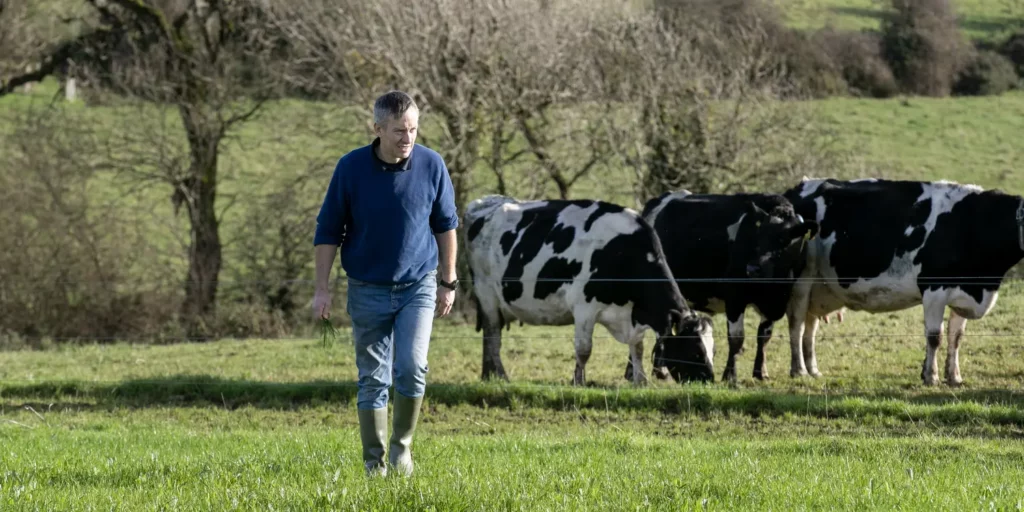
Have you locked in your autumn grazing plan for this year? Grassland expert Pat Delaney is here to help, explaining why it matters, sharing ideal grazing targets, and answering common questions about best practices.
Grass growth is extremely low in winter – it’s unavoidable. So, it must be grown in autumn if you want to have grass available for spring grazing. How your stock graze in autumn will determine your grass and forage supply in spring – it’s that simple.
And with a kilo of grass dry matter (DM) worth around €0.17 in spring versus €0.11 in autumn (DAFM, 2025), planning can give you a more productive start in spring.
While good grassland management is challenging, it gives you more control over grass production and supports profitability. This advice can be used in a continuous cycle to support your autumn grazing management.

Caption: Germinal expert Pat Delaney
Autumn grazing targets
Final grazing rotation
- Should last 30-40 days after closing the first fields around 1st October.
- Drier farms can start closing around 10th-15th October.
60:40 rule
- Aim to graze at least 60% of your farm by 31st October. On highly stocked farms, aim to close 70% by late October.
- Graze the remaining 40% by mid-November.
- Drier farms can potentially delay these dates by one week.
Residual target
- Graze well to encourage plant tillering. Aim for a residual of 3.5cm-4.0cm or 100kg DM/ha.
- Highly stocked farms shouldn’t have a higher grazing residual. They will close at a higher farm cover, but not with a higher post-grazing residual.
- Poorly grazed fields in autumn produce decaying material over winter that will harm your spring grass supply.
Autumn grazing covers
- Your closing cover should be approximately 650-700kg DM/ha. The optimal figure is determined by your spring grass demand, as driven by stocking rate and calving intensity.
- Farms with a higher stocking rate will have greater demand for grass in spring, so they must close at a higher cover.
- 1,000kg DM/ha is a typical spring opening cover.
Sample autumn rotation planner: 20-hectare farm with heavier soil
To hit your ideal closing cover, we recommend creating a plan for your grazing system. Below is a sample that you can take and adjust by inputting your own details.
With drier soil, you might be able to push back your initial closing date, once you’re not grazing into your spring grass demand.
| Farm size | 20 hectares | |
| Closing start date | 1st October | |
| Target dates | 60% grazed by: | 40% grazed by: |
| 21st October | 16th November | |
| Number of days | From start date to 60% date: | From 40% date to housing date: |
| 21 days | 26 days | |
| Total hectares to graze | 0.6 x total area | 0.4 x total area |
| 0.6 x 20ha = 12ha | 0.4 x 20ha = 8ha | |
| Weekly hectares to graze | Total area / number of days x 7 | Total area / number of days x 7 |
| 12ha / 21 days x 7 = 4ha / week | 8ha / 26 days x 7 = 2 ha/week | |
Common questions about autumn grazing
Which fields should I close first?
Start to close fields that are sheltered and closest to the yard, as they will be grazed first in spring. Then close the wettest fields, followed by your remaining fields.
With any reseeds, close these fields towards the end of October. In late autumn, grazing reseeds to a low residual is recommended, allowing sunlight to reach clover stolons, promoting survival and spring growth of the plant.
If covers are too high in spring, then stock will also struggle for clean out due to the higher fibre and lower energy content.
What’s the best way to move stock?
- Any heavy cattle you’re finishing over winter should be housed first.
- Block grazing and back fencing are useful tools.
- Improve utilisation by using a strip wire and moving animals once a day.
- Back fencing can lift utilisation on heavier covers.
- Consider separate entrance and exit points and multiple water troughs to reduce the risk of poaching if weather conditions deteriorate.
Is grass still productive in November?
Measure weekly so you know how much grass is available. Well-managed grass at the two-and-a-half leaf stage has 12MJ metabolisable energy and 20% crude protein into November. This can still drive milk production and body condition gains.
When should I start building covers?
Start in August so that covers peak in mid-September. Your ideal autumn grazing cover will depend on soil type.
| Soil type | Dry soil | Heavy soil |
| Ideal farm cover | 1,150 kg DM/ha for grazing until November. | 900 kg DM/ha for grazing until early mid-October. |
How can I reduce demand for grass?
Scan and identify empty cows, review somatic cell counts and yields on dry cows, and sell any poor performers. Sell stores in good condition as early as possible.
Supplement autumn calvers, stores, and spring-born calves with concentrate. You can also house forward stores for a short, intensive finishing period and feed high-quality, high dry matter silage and concentrate.
When should I hit the target residual?
Prioritise hitting the 4cm ideal residual in the last grazing rotation. Doing this ensures enough light reaches the base of the sward during winter, minimising tiller death.
What if I hit the closing cover ahead of schedule?
While planning is important, be flexible based on what you’re seeing. Monitor autumn grazing covers and know that it’s okay to close the farm early if you’ve already hit your targets.
Can I keep grazing if growth is strong?
Don’t be tempted to go back and graze closed fields. Each day that closing is delayed will reduce grazing covers by 15kg DM/ha (Teagasc, 2025), meaning what is grazed now won’t be available in spring.
If you’re struggling to meet daily grass allocations, you can feed supplements to buffer any shortfall, rather than overgrazing and removing grass needed for spring.
Forage to food
Want to take your grass and forage production to the next level? We have five Climate Smart mixture ranges designed to improve performance and sustainability. Find them here or ask your regional Germinal expert to learn more.

Tags